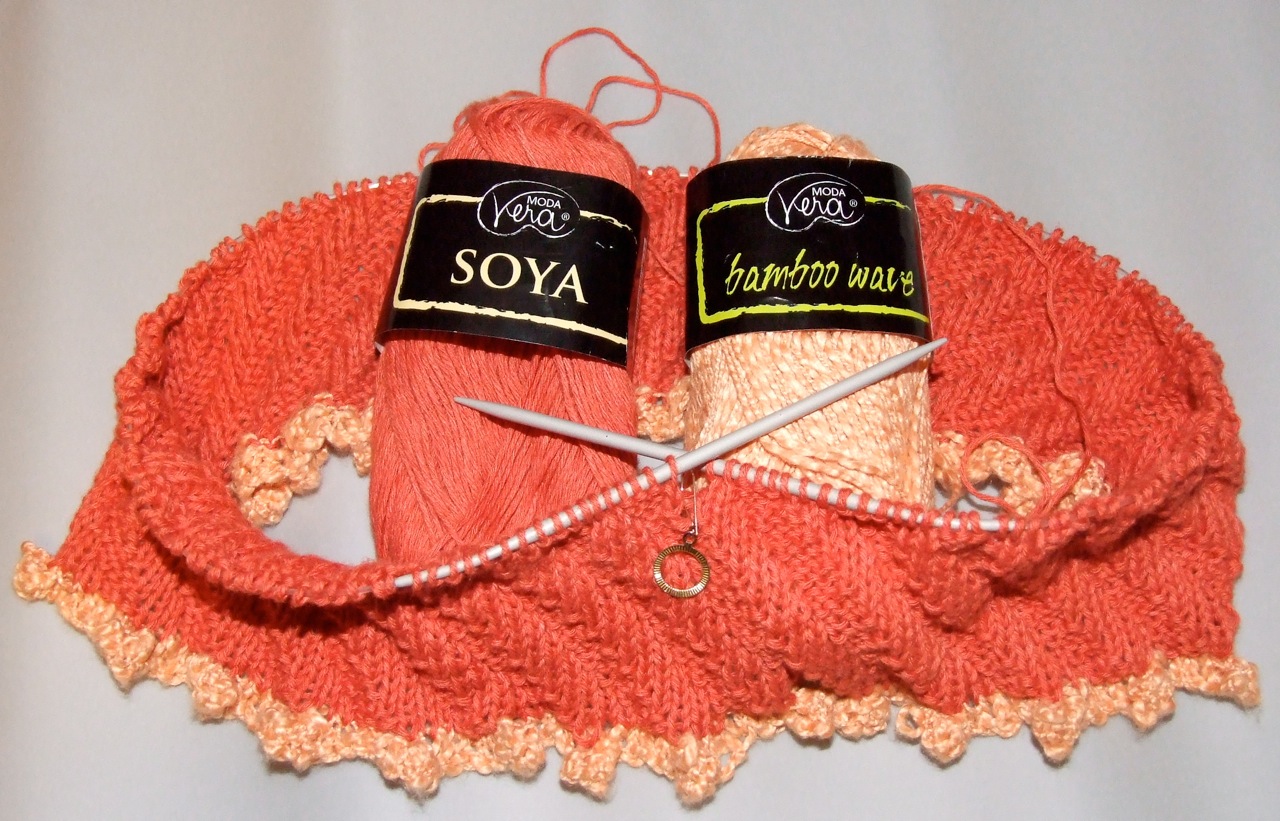
I'm well underway now in my first project using the new soy yarn I recently discovered. I took a photo of the work-in-progress (with Theo's help) and have registered it as a project at ravelry under the name Tomato Aibhlinn.
Sunday, March 1, 2009
tomato Aibhlinn
Labels:
craft
Thursday, February 26, 2009
saving water
I was surprised at how much less water we've been using as shown above on my latest bill. I made sure the garden received plenty of water by hosing most Wednesdays and Sundays when we're allowed to use the hose. And yet we've used about 20% less water than usual. The penny finally dropped (via Theo's younger and better brain): we now have a dual flush toilet. It uses so much less water, even less than half. Well, this is nice to see.
Labels:
water
more on soy
tajm @ gardenweb: I have been using soy yarn for everything lately. It is so soft and strong....lovely for those close to the body items. It looks like silk, lasts like cotton!
There are a few soy and soy blend yarns available. I've found little information about the Moda Vera yarn but some about other yarns and about soy yarn generally.
.
This is an 8-ply equivalent, 22 sts to 10cm gauge, cotton-style yarn.
.
There are two main providers of soya yarn: Sirdar (Just Soya) and South West Trading Company (Oasis, Phoenix and Pure).
This is also close to an 8-ply equivalent, 26 sts to 10cm gauge, so just a little finer.
.
SWTC's Oasis (Multi or Solid) and Pure both have 20 sts to 10cm gauge and so they are probably thicker than either of the above.
by llamallover @ ravelryand @ flickr
by cas~ @ southall blog, also via ravelry
This is machine knitted in the main with hand-knitted borders. It gives a good idea of the fall of the yarn.
This is one of the few projects or patterns I've been able to find using Moda Vera Soya. Spotlight does have a pattern for a boy's jumper in this yarn. Ravelry has a few other projects.
More info:
* Spotlight which makes Moda Vera
* Moda Vera Soya @ ravelry
* Just Soya @ Sirdar
* Sirdar Just Soya @ K & J Crafts
* Just Soya @ yarnmarket
* Yarn Profile: Soy Silk Phoenix @ Knitter's Review
* SWTC (soysilk) Oasis yarn
* Oasis @ ravelry
* Oasis patterns @ soysilk.com (photos only)
* Improvised designs in SWTC Oasis Multi @ ravelry
* Oasis Solid @ ravelry
* SWTC Pure (soysilk) yarn
* Soy fibre yarn @ a stranded yarn (one of their products)
* Soybean Protein Fibre general info @ swicofil
Labels:
craft
Wednesday, February 25, 2009
tomato soy
photo by liscrafts @ flickr
I dropped in at Spotlight today and fell in love with this soft-to-the-touch yarn and this tomato colour. It was also on special at just $1.49 per 50g ball. At the same time I bought some Moda Vera Bamboo Wave Colour 02 at only $1 per 50g ball. I have 12 balls of the soya yarn and 10 of the bamboo. The challenge now is to find a suitable project that uses both of them in a nice way. So far this one looks interesting:
I would use the tomato soy for the plain knit (grey in this example) and the orange bamboo wave for the rib stripes (blue here).
photo from eebelbbub @ flickr via ravelry
yarn in off-white, not the orange of colour 02
Labels:
craft
Tuesday, February 10, 2009
David and Delpo
(both photos from Getty Images)
This post page will track the progress in rankings and points between Argentine tennis players David Nalbandian and Juan Martin Del Potro (aka Delpo). As at 10feb09, Delpo is ranked #7 while David #10. There are currently 955 ranking points between them. Both won a title (as pictured above) just before the Australian Open. David fell there at R64 while Delpo fell against Federer at the QF. Below are a table and chart detailing their ranking points.

More info: see the Vamos David fan blog and the Juan Martin Del Potro blog (though this one seems no longer active since November 08).
Labels:
tennis
Monday, February 9, 2009
tennis rankings
I have been curious about how much of the tennis ranking points are taken by the top players, especially by Federer and Nadal in recent years.
I decided to investigate this by extracting information from the ATP Tour website, confining myself to the top 50 players and taking a ranking points snapshot at the first week in February each year, going back to 1996. I then summed these top 50 points and calculated what proportion of this total went to each of the top 3 players at that time. The results are shown in the chart above.
In the era when Pete Sampras dominated the sport the top 3 players took between 13% to 18% (0.13 to 0.18) of the top 50 ranking points. Since then, there has been a steady rise from 15% (in 2001 with Safin and 2002 with Hewitt at #1) to 20% (in 2006 with Federer/Nadal at #1/#2) until the present 23% (with Nadal/Federer/Djokovic in the top 3 places).
It is clearly the case, then, that the players at the very top of the game are accumulating more and more of the tennis ranking points as a proportion of the ranking points going to the top 50 players.
A preliminary look at changing patterns in recent years suggests that it is the lower ranked players who are "paying" for this drift in ranking points. For example, in 2002 players in the ranks from 31 to 50 received 40% of the points going to the top 50 players while in 2009 they were receiving only 36% of those points. The burden is therefore spread widely but, if this trend were to continue, it would surely have a detrimental impact on the game, discouraging the lesser players more and more.
Labels:
tennis
Monday, February 2, 2009
Greek salad
SBS video: Greek Salad
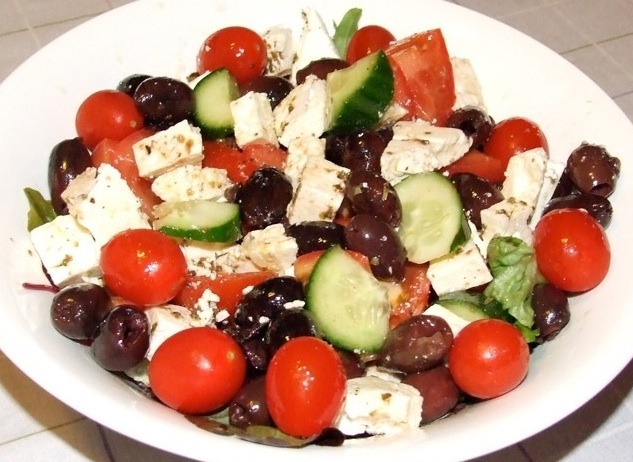
Greek salad is one of our favourite dishes. The basic four ingredients are tomato, cucumber, black kalamata olives and feta cheese. In the photo above we've used both diced large tomatoes and whole cherry tomatoes. I usually use Lebanese cucumbers which are small and sweet and don't need to be peeled. Back before these were available we used the large regular cucumbers which needed to be peeled and sometimes even seeded. Also good are the telegraph or "burpless" cucumbers. My son prefers pitted kalamata olives while I still like the large whole olives. For me, dealing with the olive stone is part of the fun or ritual of eating this dish. Finally, the feta is best if Greek, of course. Australian and Bulgarian feta are also good but Danish feta is a misnomer.
For all my salads, I keep a jar in the fridge of already made up salad dressing. For that, I put some mustard into the jar, about a heaped tablespoon for a 500 ml jar. I usually use Dijon mustard but any milder mustard will do. I then add about a level tablespoon of tarragon leaves crushed between the palms of my hands to make them finer. I then fill the jar to about a third of the way with a mixture of white and red wine vinegar and perhaps also a dash of Balsamic vinegar, depending on my mood. Finally I fill the rest of the jar with good extra virgin olive oil, leaving about 2 cm gap at the top. This allows room for the ingredients to move about well when I shake the jar up to blend the ingredients.
For a smallish Greek salad like the one above, I would drizzle two or three tablespoons of dressing over the salad.
Optional extras are a bed of lettuce, chopped capsicum or celery, lentil sprouts sprinkled on top, dried marjoram sprinkled over the feta.
Note that I don't use salt or pepper in the dressing or salad ingredients. There is enough salt in the olives and feta while pepper is best added at the table freshly ground and to each person's taste.
Labels:
kitchen
Subscribe to:
Posts (Atom)